Key takeaways
- Motel vouchers aren't one program — they're issued locally by county social services, domestic violence shelters, the Red Cross, and the Salvation Army, each for different situations.
- Beyond general homelessness, vouchers commonly cover domestic violence safety, disaster displacement, and foster care emergency placements.
- 211 is the fastest route to whatever's currently funded and appropriate for your specific situation.
- Vouchers are always free — no legitimate program charges a fee to issue or “release” one.
Table of contents
Who actually provides motel vouchers
There's no single "motel voucher" agency — funding and issuance happen locally, through several distinct channels that each serve a different need:
- County Department of Social Services — uses emergency motel vouchers as a last resort when shelters are full, typically for families with children.
- Domestic violence shelters and coalitions — issue vouchers when their own shelter is full or a safety concern makes a shelter inappropriate.
- The American Red Cross — primarily after disasters; see our disaster relief guide if that's your situation.
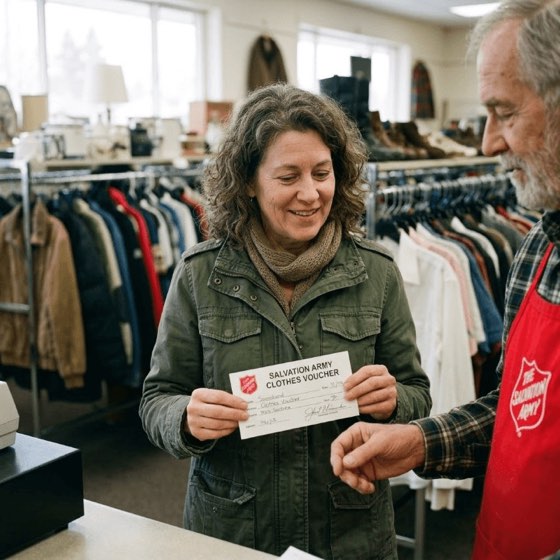
- The Salvation Army — provides emergency lodging support case-by-case, especially outside disaster contexts.
- Local Continuum of Care (CoC) networks — the coordinated homeless services system in most regions, which 211 can connect you to directly.
Because these channels operate independently rather than through one shared database, it's genuinely worth contacting more than one if your situation touches multiple categories — someone displaced by a fire who is also fleeing an unsafe home situation, for instance, may find faster help through a domestic violence coalition than through general disaster channels, or vice versa, depending on which has active funding that day. Keeping a written note of who you've already contacted and what they said helps avoid duplicate calls to the same office if your search stretches across more than a day or two.
Situations beyond general homelessness
Motel vouchers cover more specific situations than a general "I'm homeless" search implies:
- Domestic violence. If your own shelter can't accommodate you — full capacity, or a specific safety concern like an abuser who knows the shelter's location — a motel voucher is a common bridge; say so explicitly when you call, since DV-specific intake often has faster, separate processes.
- Disaster displacement. After a fire, flood, or storm, Red Cross and FEMA-adjacent programs commonly use motel vouchers while longer-term housing is arranged.
- Foster care emergency placements. Child welfare agencies sometimes use motel stays as a genuine last resort when no immediate foster placement is available.
- Pet-owning or coupled households. Traditional shelters often can't accommodate pets or keep couples together, which is one of the most common reasons a motel voucher gets used instead of shelter.
For more specifics, see our guides on how to request Salvation Army lodging assistance online and local churches that fund motel stays.
What qualifying typically requires
Requirements vary by issuing organization, but consistently include: proof of identity for adults in the household, a clear statement of the emergency (disaster, DV situation, family crisis), and household size confirmation if children are involved. Income documentation is sometimes required but often waived for genuine same-day emergencies — the priority is immediate safety, with paperwork sorted afterward in many cases. If you don't have identification readily available — common in a fire, sudden displacement, or a rushed departure from an unsafe home — say so directly rather than assuming that disqualifies you; most emergency programs have a process for verifying identity through other means when standard ID isn't accessible, precisely because emergencies rarely happen with paperwork in hand.
How to apply, fastest to slowest
For a same-day need: dial 211 first, since it has real-time knowledge of what's currently funded in your specific area — this is almost always faster than searching online for a specific program. If domestic violence is the situation, the National Domestic Violence Hotline (1-800-799-7233) can connect you directly to shelter and voucher resources with safety-specific handling. For disaster situations, register with DisasterAssistance.gov and contact the Red Cross directly, since both track disaster-specific lodging assistance separately from general homeless services. If your situation involves a child welfare agency or a foster placement, that agency's own emergency line — rather than 211 — is usually the correct first call, since foster-related motel stays are typically arranged directly through the caseworker already assigned to the case rather than through general homeless services channels, which may not have visibility into an active foster care case.
How long a voucher typically lasts
Most motel vouchers cover a short, defined window — commonly 1 to 3 nights — rather than an open-ended stay, since they're designed as an immediate bridge rather than a housing solution. Extensions are possible in specific circumstances: extreme weather events (a cold snap or heat emergency) sometimes trigger automatic extensions through local emergency management, domestic violence situations may extend based on an ongoing safety assessment, and disaster-related vouchers through the Red Cross often last as long as a household's home remains genuinely uninhabitable, subject to periodic reassessment. If you need an extension, ask the issuing organization directly rather than assuming it will happen automatically — most require an active check-in or reassessment before extending.
What to know about the motel itself
Voucher programs typically work with a pre-approved list of local motels rather than letting you choose any location — this is usually for practical reasons (negotiated rates, safety vetting of the property) rather than an attempt to limit your options. If you have specific needs — proximity to a child's school, accessibility requirements, or a location away from a specific area for safety reasons — mention this when the voucher is issued, since caseworkers can often accommodate reasonable requests within their approved list. Bring your own basic supplies if possible (toiletries, a phone charger), since vouchers cover the room itself but rarely include amenities beyond what the motel normally provides for its regular paying guests. A change of clothes and any daily medications are worth prioritizing if you're leaving in a hurry, since replacing those quickly is often harder than replacing other belongings, and pharmacies can sometimes provide emergency refills with proof of an existing prescription even without your usual bottle in hand.
What happens after the voucher
A motel voucher is a bridge, typically covering 1–3 nights, occasionally extended during extreme weather or while a specific safety situation resolves. Whoever issues the voucher usually assigns a case worker to help plan the next step — shelter, a rapid re-housing program, or return to a resolved living situation. Our housing help guide and rent relief guide cover what commonly comes next once the immediate emergency is stabilized.
Related guides
- A general step-by-step guide to getting a hotel voucher — The broader process across situations, for comparison with the motel-specific version here.
- Finding free hotel vouchers in your specific area — A locator-focused companion to this guide.
- How the Salvation Army's motel voucher program specifically works — More detail on this particular organization's process.
Frequently asked questions
Are motel vouchers only for homeless people?
No — they commonly cover domestic violence situations, disaster displacement, and foster care emergency placements too, not just general homelessness. Being specific about your actual situation when you call helps you reach the right program faster.
How much do motel vouchers usually cover?
Typically 1–3 nights, occasionally extended during extreme weather or an unresolved safety situation. They're meant as a bridge to shelter or a longer-term solution, not ongoing housing.
What's the fastest way to get a motel voucher today?
Dial 211 — it has real-time knowledge of what's currently funded locally, which is usually faster than trying to identify and contact a specific program yourself.
Do I need proof of income to get a motel voucher?
Sometimes, but it's often waived for genuine same-day emergencies, with documentation sorted out afterward. Immediate safety is generally prioritized over paperwork in true emergencies.
Can I bring pets with a motel voucher?
It depends on the issuing organization and the specific motel on their approved list — some accommodate pets specifically because traditional shelters can't, which is one of the most common reasons a motel voucher gets used in the first place. Ask directly when the voucher is arranged, since not every approved motel is pet-friendly.
Estimates are informational only, not financial advice or an offer of credit — see our disclaimers.
Before you apply: program rules, amounts, and deadlines change. Always confirm details with the official agency or program administrator. Applying for government benefits is free.
National Relief Program is an independent guide, not a government agency. Spotted an error? Email support@nationalreliefprogram.org.