Quick answer
The federal government does not give individuals grants to buy cars. Real options: donated-car charities such as Vehicles for Change (Maryland, Virginia, Michigan), Good News Garage (New England), and Good News Mountaineer Garage (West Virginia) award repaired cars to income-eligible working families, usually by referral from a social service agency; nonprofit car-loan programs and credit unions make lower-cost loans to people rebuilding credit; and state TANF and workforce programs can pay for car repairs, transportation, or sometimes a vehicle when it is needed to keep a job. Ask your caseworker or dial 211. Never pay a fee to apply for a “free car grant.”
Key facts
- No federal car grants go to individuals; programs that help are run by charities, credit unions, and state agencies.
- Donated-car charities usually require a job or job offer, a valid license, the ability to pay insurance and upkeep, and a referral from a partner agency.
- Good News Garage Vermont takes referrals through Reach Up case managers; other programs work with similar agencies.
- TANF funds can pay transportation costs tied to work in many states.
- Scammers often ask for “processing” or “delivery” fees for a free car; real programs do not.
Table of contents
- Are there real grants for cars for low-income families?
- Which charities give cars to low-income families?
- Where can I get an affordable car loan with bad credit?
- Can TANF or workforce programs help me get a car?
- What will a car really cost each month?
- What do car programs ask for?
- What should I do, step by step?
- Related guides
- Frequently asked questions
Are there real grants for cars for low-income families?
Not from the federal government to individuals. USA.gov has long stated that the federal government does not offer grants or “free money” to individuals for personal expenses. Money for transportation reaches families through programs: TANF and workforce funds, charities, and lenders that serve people with low credit. Our guide to free cars from the government covers the myths in detail.
| Option | What you get | Typical requirements |
|---|---|---|
| Donated-car charity | A repaired used car, free or at low cost | Job or job offer, license, insurance, agency referral, income limits |
| Nonprofit car-loan program | A reliable used car with an affordable loan and credit building | Steady income; job; sometimes financial coaching |
| Credit union auto loan | Lower rates than buy-here-pay-here lots | Membership; income; some accept low credit |
| TANF or workforce funds | Repairs, transportation costs, occasionally a vehicle | Enrolled in TANF or a workforce program; need tied to work |
| Vocational rehabilitation | Vehicle modifications for people with disabilities | Eligible for state VR services |
Which charities give cars to low-income families?
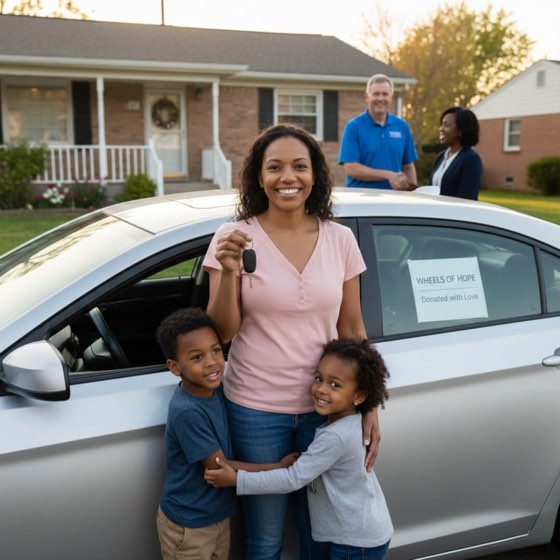
- Vehicles for Change (Maryland, Virginia, Michigan) repairs donated cars and awards them to low-income working families referred by partner agencies, typically with a small payment and a loan that builds credit.
- Good News Garage (Vermont and other New England states) accepts donated cars and awards repaired vehicles to income-qualified individuals and families; in Vermont, applicants are referred by their Reach Up case manager, according to Vermont 211.
- Good News Mountaineer Garage (West Virginia) distributes donated cars to low-income families who need transportation to work.
- Local church and community programs in many cities do the same on a smaller scale; ask 211, your caseworker, or local churches.
Most programs serve only their region, have waiting lists, and choose families who need a car to keep or get a job. Ask your TANF caseworker, workforce center, domestic violence advocate, or veterans service officer to refer you, since many programs only accept agency referrals.
Where can I get an affordable car loan with bad credit?
- Credit unions often lend to members with modest credit at far lower rates than buy-here-pay-here dealers; some offer credit-builder programs.
- Community development credit unions and CDFIs serve low-income borrowers and sometimes run car-ownership programs with financial coaching.
- Nonprofit car-ownership programs (some run by the charities above) sell inspected cars with affordable loans that report to credit bureaus.
- Get pre-approved first, then shop; compare the total cost, not just the monthly payment.
The CFPB’s auto loan tools explain how to compare offers and spot add-ons. Use our auto loan calculator to see how rate and term change the total.
Can TANF or workforce programs help me get a car?
Often, for transportation tied to work. States can use TANF funds for work supports such as car repairs, insurance, registration, gas cards, and, in some states, help buying a vehicle, and many TANF agencies offer one-time diversion payments instead of monthly cash, as HHS explains in its TANF overview. Workforce programs funded by WIOA can pay supportive services such as transportation during training. Ask your caseworker directly: “Can TANF or workforce funds pay for a car repair or a vehicle so I can keep this job?”
What will a car really cost each month?
A free car still costs money every month: insurance, registration, fuel, maintenance, and repairs. Budget for them before accepting a car. Some states offer low-cost auto insurance for low-income drivers, such as California’s Low Cost Auto Insurance Program, New Jersey’s Special Automobile Insurance Policy, and Hawaii’s program for public assistance recipients; see our guide to government car insurance for low-income drivers. SNAP (up to $1,023 a month for four from Oct. 1, 2026 – Sept. 30, 2027) and LIHEAP free up money for car costs; estimate SNAP with our SNAP calculator.
Watch out: sites that promise a free government car for a “processing,” “title,” or “delivery” fee are scams. Charities never ask for gift cards or wire transfers.
What do car programs ask for?
Donated-car charities and nonprofit loan programs want to know the car will be used for work and kept on the road. Most ask for:
- A valid driver license and a clean enough driving record to get insurance.
- Proof of a job, job offer, or job training enrollment, often with a letter from the employer.
- Proof of income showing you can afford insurance, gas, and upkeep.
- A referral letter from your TANF caseworker, workforce counselor, or partner agency.
- Proof of residence in the program’s service area.
- Completion of a short financial or car-care class, in some programs.
Ask how long the waiting list is and whether the program reports payments to credit bureaus, which helps rebuild credit.
What should I do, step by step?
- Ask your caseworker or workforce center about TANF transportation help and referrals to car programs.
- Dial 211 and ask for “vehicle donation programs” and “car repair assistance” in your area.
- Join a credit union and ask about auto loans and credit-builder products.
- Budget insurance, registration, and maintenance before accepting any car.
- Keep your current car running: repair help is often easier to get than a new car; see our car repair guide.
Applying is free. Car charities, TANF offices, workforce centers, and 211 never charge.
For more specifics, see our guides on free cars for low-income families and down payment car assistance programs.
Related guides
- Car grants for low-income families
- Government car voucher program
- Emergency car payment assistance
- Financial assistance for car repossession
Frequently asked questions
Can low-income families get a free car from the government?
Not directly. The federal government does not give car grants to individuals. TANF and workforce programs can pay for transportation tied to work, and charities award donated cars.
Which charities give free cars?
Regional programs such as Vehicles for Change, Good News Garage, and Good News Mountaineer Garage award repaired donated cars to working, income-eligible families, usually by agency referral.
Can TANF pay for a car?
In some states, yes, or at least for repairs, insurance, registration, or transportation needed to keep a job. Ask your TANF caseworker.
How do I get a car loan with bad credit?
Start with a credit union or community development lender, get pre-approved, and compare the total cost. Avoid buy-here-pay-here lots with very high rates when you can.
Are free car grant websites real?
Sites that charge a fee to apply for or deliver a free car are scams. Real programs never charge an application fee.
Sources
Facts on this page were checked against these sources on October 25, 2026. If a source and this page ever disagree, follow the source.
This guide is general information, not legal or financial advice. Charity programs and service areas change; confirm with each program. National Relief Program is an independent website, not a government agency.
Before you apply: program rules, amounts, and deadlines change. Always confirm details with the official agency or program administrator. Applying for government benefits is free.
National Relief Program is an independent guide, not a government agency. Spotted an error? Email support@nationalreliefprogram.org.