Key takeaways
- Eligibility generally requires being 60 or older (or disabled), homebound, and unable to prepare your own meals — not simply low income alone.
- Cost varies by local program: many charge $5–$9 per meal on a sliding scale, while others are entirely free for qualifying low-income seniors, with a suggested voluntary donation.
- You apply through your local Area Agency on Aging, not a national Meals on Wheels office — the program is a network of independently run local affiliates.
- The application involves a health, mobility, and financial assessment, usually done over an intake phone call.
Table of contents
Who actually qualifies
Meals on Wheels eligibility centers on need, not just age or income alone. The consistent core requirements across most local programs:
- Age 60 or older, or younger with a qualifying disability that affects the ability to cook
- Homebound — unable to easily leave home for shopping or a senior center meal
- Unable to prepare your own meals, whether due to physical limitation, cognitive decline, or lack of resources
- Residency within the specific program's delivery zone — coverage areas are set locally and don't extend everywhere
- Lacking family or other support who could otherwise help with meal preparation
Most programs also serve a qualifying spouse or partner living in the same household, even if that person alone wouldn't independently qualify. Car ownership can sometimes affect eligibility in some programs' assessment, since it may suggest an ability to shop independently — though this varies by local agency and individual circumstance. Income itself is often a secondary factor rather than a strict cutoff — many programs are funded to serve any qualifying homebound senior regardless of income, though some ask about income to determine your position on a sliding fee scale or to prioritize genuinely low-income households when a waitlist exists.
What it typically costs
Cost varies significantly by local program. Many charge in the range of $5 to $9 per meal, often on an income-based sliding scale, while others provide meals entirely free to qualifying low-income seniors, funded through a mix of Older Americans Act federal funding, state dollars, and local donations. Even paid programs frequently structure the fee as a "suggested voluntary contribution" rather than a strict requirement — meaning no one is turned away from a meal for inability to pay, though contributing what you can helps sustain the program for others. Because funding sources and local cost of living both factor into a program's fee structure, two neighboring counties can have noticeably different pricing for what is otherwise the same basic service, so it's worth asking directly about your specific local program's fee policy rather than assuming a number from a general online search applies to your area.
For more specifics, see our guides on related senior assistance for incontinence supplies and help with home heating and cooling, another common senior need.
How to apply
Meals on Wheels is not run by a single national office — it's a network of independently operated local affiliates, so you apply through your local Area Agency on Aging, not a national hotline. Find yours through the Eldercare Locator (1-800-677-1116) or the Meals on Wheels America locator. The application process typically involves an initial phone assessment covering your health status, mobility limitations, and financial situation, sometimes followed by an in-home visit. Family members and caregivers can call on behalf of an older adult to start the process, though most programs require final eligibility to be confirmed directly with the applicant.
What's actually delivered
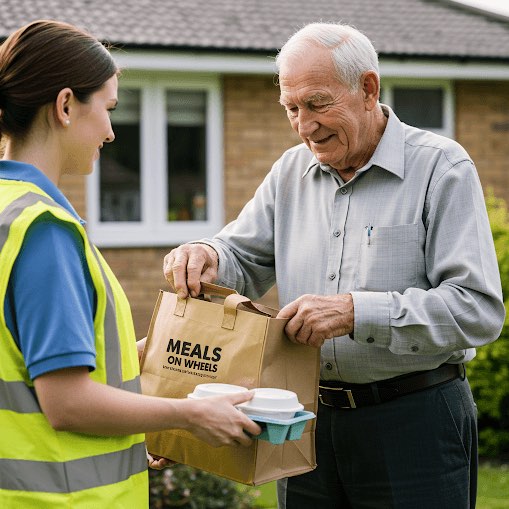
Meals are planned to meet nutritional guidelines — typically designed to provide roughly one-third of the USDA's recommended daily dietary allowance for an older adult, delivered hot or frozen depending on the program and your preference. Beyond nutrition, the delivery itself often serves a secondary but important purpose: a daily wellness check, since a volunteer or staff member seeing the recipient regularly can flag concerns (a missed answer at the door, visible decline) to family or the agency.
Special diets and dietary restrictions
Most local Meals on Wheels programs can accommodate common dietary needs — diabetic, low-sodium, pureed or soft-food textures for chewing or swallowing difficulties, and some cultural or religious dietary preferences — though the range of options varies by local program's kitchen capacity and funding. Mention any dietary restriction during the initial assessment call rather than after service begins, since some programs prepare meals in batches on a schedule that makes mid-stream changes harder to accommodate quickly. If your local program can't fully meet a specific medical dietary need, ask specifically about medically-tailored meal delivery alternatives, which are more specialized (and sometimes insurance-covered) than standard Meals on Wheels service.
Beyond meals: what else the program often provides
Many local Meals on Wheels affiliates bundle additional services alongside meal delivery, funded through the same Older Americans Act dollars or local partnerships: a brief wellness check at each delivery (as mentioned above), pet food delivery for homebound seniors who might otherwise skip their own meals to feed a pet, referrals to other senior services (transportation, home repair, utility assistance) when a volunteer notices an unmet need, and in some areas, friendly phone check-in calls on days without a physical delivery. These wraparound services aren't guaranteed everywhere, but it's worth asking your local program directly what else is included beyond the meal itself. Some affiliates also coordinate directly with local Adult Protective Services or a case manager when a delivery volunteer notices signs of self-neglect, isolation, or an unsafe home environment, which makes the daily visit itself a meaningful safety net well beyond its nutritional purpose. This coordination, when it exists, is usually established quietly rather than advertised, so it's not something to expect uniformly everywhere — but it's a genuine additional benefit worth knowing about if a family member's safety is part of your concern. Asking directly whether your local affiliate offers this kind of coordination is a reasonable question during the initial intake call.
If you don't qualify or there's a waitlist
Some local programs run waitlists when demand exceeds current funding or volunteer delivery capacity. If that's your situation, or if you don't meet the homebound criteria specifically, alternatives include: Mom's Meals and similar paid medically-tailored meal delivery services (sometimes covered by Medicare Advantage plans or Medicaid waivers); local senior center congregate meal programs, which serve meals on-site rather than delivering, for seniors who can travel; and standard food bank or SNAP benefits, covered in our food relief guide, for anyone not specifically homebound. Being placed on a waitlist doesn't mean starting over from scratch if your situation changes — ask the local agency what would move you up the list, since a documented health decline, a fall, or a new mobility limitation is often grounds for reassessment ahead of the standard queue.
Related guides
- Honest limitations of Meals on Wheels — What the program doesn't cover, and when an alternative fits better.
Frequently asked questions
Is Meals on Wheels free?
It depends on the local program — many charge $5–$9 per meal on a sliding income scale, while others are entirely free for qualifying low-income seniors, often structured as a suggested voluntary donation that no one is denied service for skipping.
Who qualifies for Meals on Wheels?
Generally people 60 or older (or younger with a qualifying disability) who are homebound and unable to prepare their own meals, living within the specific local program's delivery area.
How do I apply for Meals on Wheels?
Contact your local Area Agency on Aging, found through the Eldercare Locator (1-800-677-1116) or the Meals on Wheels America online locator — there's no single national application, since each area runs its own affiliate program.
Can a family member apply on behalf of an older relative?
Yes, a caregiver or family member can start the process by calling, though the local agency typically confirms final eligibility directly with the applicant through an assessment call or visit.
Does Medicare or Medicaid pay for Meals on Wheels?
Traditional Medicare generally doesn't cover Meals on Wheels directly, but some Medicare Advantage plans include a meal delivery benefit, and Medicaid home and community-based services waivers in many states can cover meal delivery for qualifying enrollees. Ask your local Area Agency on Aging which funding sources apply to your specific situation.
Estimates are informational only, not financial advice or an offer of credit — see our disclaimers.
Before you apply: program rules, amounts, and deadlines change. Always confirm details with the official agency or program administrator. Applying for government benefits is free.
National Relief Program is an independent guide, not a government agency. Spotted an error? Email support@nationalreliefprogram.org.